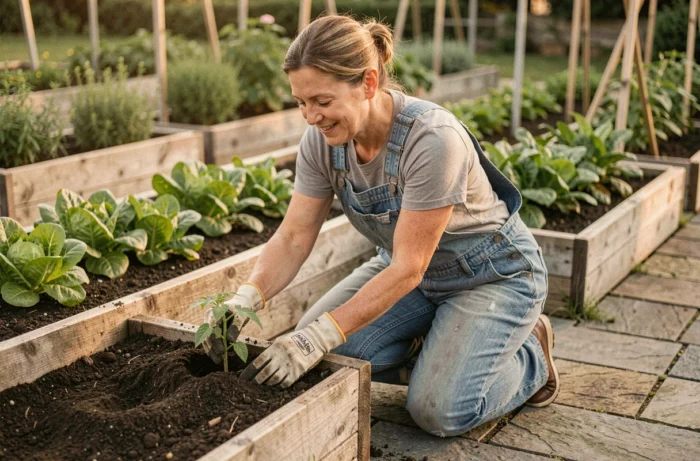
A productive vegetable garden all year round relies less on adhering to a national calendar and more on the ability to read one’s soil, anticipate water constraints, and adjust interventions to the microclimate of the plot. We will detail the technical levers that make the difference between a garden that survives and a vegetable garden that truly produces.
Water stress in the vegetable garden: adapting irrigation to local restrictions
Periods of drought are now occurring earlier and more severely. Météo-France links the rise in temperatures to increased evaporation, which dries out soils well before the usual summer peaks. A direct consequence: garden irrigation may be limited by prefectural orders, with varying levels of restriction depending on the department.
The government site VigiEau allows you to check the rules applicable locally. We recommend consulting it before each season to anticipate necessary adjustments. A vegetable garden designed without considering these constraints risks losing part of its production in the height of summer.
In practical terms, adapting your vegetable garden to water stress involves rethinking the choice of varieties. Water-hungry solanaceae (tomatoes, eggplants) should be accompanied by less demanding vegetables: garlic, onion, chickpeas, purslane. This rebalancing reduces dependence on irrigation without sacrificing the diversity of harvests. To delve deeper into these varietal choices and the associated techniques, the guides from Jardiniers info detail cultural pathways adapted to each context.
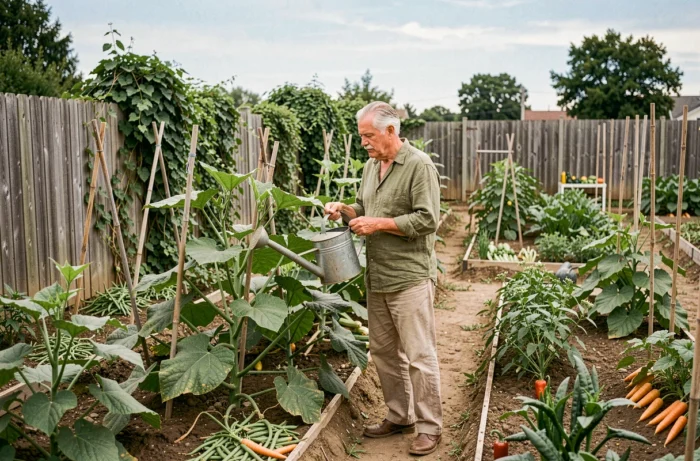
Mulching and soil cover: choosing the right material according to the season
A poorly chosen mulch can block germination or acidify the soil. The question is not whether to mulch or not, but to select the material suitable for the period and the crops in place.
- At the end of winter, a fine mulch (dried grass clippings, young compost) on the early sowing beds limits evaporation without creating a physical barrier to seedlings. Moderate thickness, no more than a few centimeters.
- In the height of summer, a thick mulch (wheat straw, hay, partially decomposed wood chips) protects the roots from heat and drastically reduces the frequency of watering.
- In autumn, green manures (mustard, phacelia, rye) take over from mulching. They cover the soil, capture atmospheric nitrogen for legumes, and structure the soil deeply thanks to their root system.
The reflex to leave bare soil between two crops is the main technical mistake we observe among both experienced and novice gardeners. A bare soil loses its structure within weeks due to the effects of sun, wind, and heavy rains.
Vegetable garden calendar and Mediterranean climate: two production seasons
In a Mediterranean climate, the vegetable garden does not operate on the classic spring-summer scheme. It is organized around two production windows: spring and autumn, separated by a summer break where heat limits the growth of most vegetables. This reality is largely absent from national gardening guides.
The first window (March to June) concentrates the sowing of tomatoes, zucchini, and beans. The second (September to November) allows for the resumption of crops of salads, cabbages, spinach, and radishes. Between the two, summer serves to maintain existing crops, harvest, and prepare the beds for autumn.
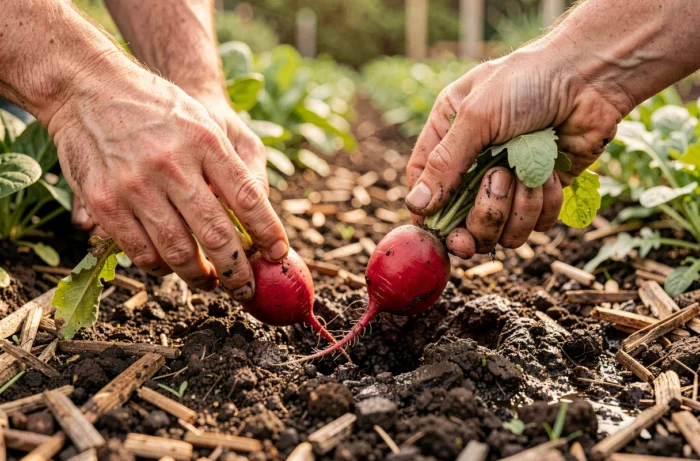
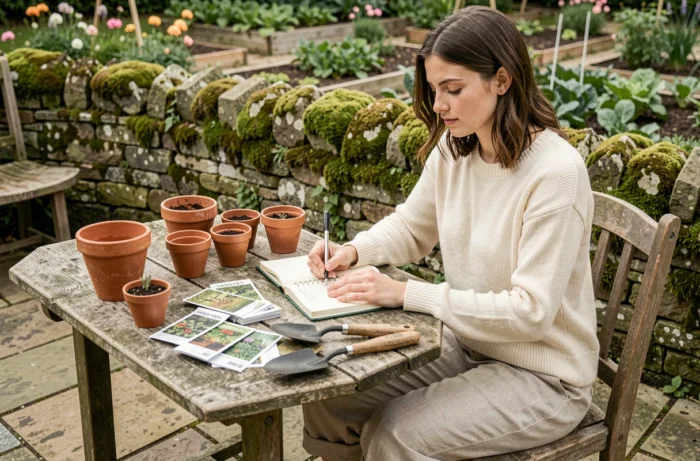
This division also applies, with variations, to the plain areas of the southwest and the Rhône valley. We recommend keeping a record of sowing and harvesting dates for at least three years to identify the actual windows for your plot, rather than following a generic lunar calendar.
Adjusting sowing to the last real frosts
The average date of the last frost is gradually moving later in many regions. Rather than relying on a fixed date, it is more reliable to cross-reference Météo-France data with your own observations. A mini-max thermometer placed at soil level provides much more useful information than the temperature displayed by the nearest weather station, which is often located at altitude or in an urban area.
Crop rotation and soil health: beyond the basic principle
Crop rotation is not limited to not replanting tomatoes in the same spot two years in a row. An effective rotation relies on alternating botanical families and root types.
After a crop of solanaceae (medium rooting, high potassium demand), we move to legumes (nitrogen fixation, deep rooting), then to lily family or umbelliferous plants (shallow rooting, low demand). This cycle over three to four years maintains fertility without massive amendments.
The soil in raised vegetable beds poses a specific problem. In a limited substrate volume, classic rotation is not enough to regenerate soil structure. Annual addition of mature compost and sowing of green manures during interculture partially compensates, but a vegetable bed that has not been amended for several years produces significantly less than a maintained bed.
Functional biodiversity in the vegetable garden: auxiliaries and plant cover
A diverse plot attracts auxiliaries (hoverflies, ground beetles, ladybugs) that naturally regulate pests. To promote this functional biodiversity, three concrete levers work:
- Maintain permanent flowering strips along the edge of the vegetable garden, with species that have staggered flowering (phacelia, marigold, borage).
- Leave an area of unworked soil where soil insects can overwinter.
- Minimize chemical interventions, including products allowed in organic farming, which also disrupt auxiliaries.
The most resilient vegetable garden is one that functions as an ecosystem, not as a succession of isolated rows. Every technical decision, from the choice of mulch to water management, influences the garden’s ability to self-regulate over the long term.