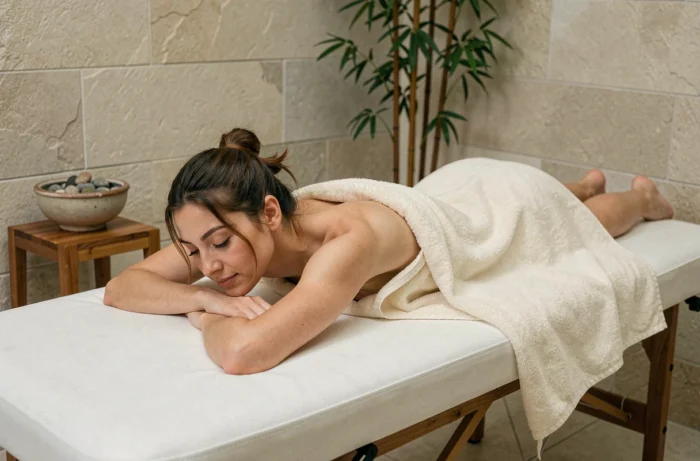
Work pressure determines everything. A massage described as “gentle” relies on maneuvers whose intensity remains below the threshold of deep fascia engagement. This technical distinction separates superficial relaxation protocols from deep tissue approaches, and it conditions both the recipient’s experience and the neuro-hormonal response achieved.
Regulatory framework for gentle massage: wellness or therapeutic
Opinion No. 2025-05 from the Order of Physiotherapists clearly delineates a boundary. Therapeutic massages fall under a physiotherapy assessment, while non-therapeutic massages are limited to prevention or wellness.
A Californian massage performed in a spa has a different purpose than a myofascial release protocol prescribed after functional assessment. The gap pertains as much to the legal framework as to the technical intention of the gesture. We recommend confirming, before any relaxation-oriented session, that the proposed approach indeed falls within the realm of wellness.
To delve deeper into the distinctions between gentle techniques and their respective indications, you can read the article on Acte Santé that details this subject precisely.
Californian massage and gentle Swedish effleurage: two distinct gesture logics
Californian massage and the gentle variant of Swedish massage are often confused. However, their gestures differ in the very construction of the sequences.
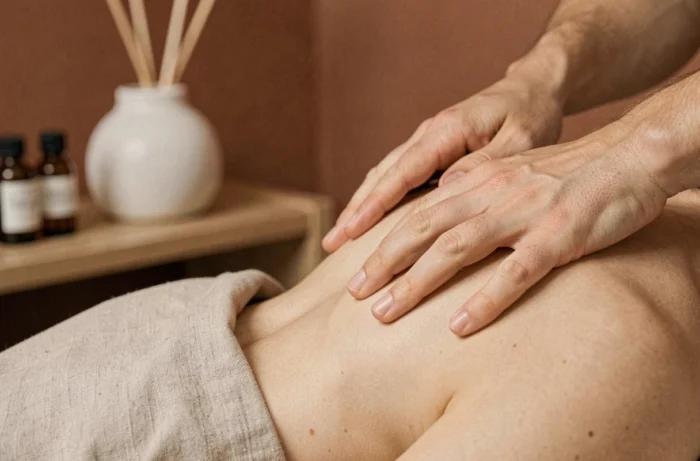
The Californian massage favors long, enveloping, and continuous movements that cover large body areas. The hands never leave the skin. The pressure remains light to moderate, without localized work on muscle knots, and the goal is to induce a psycho-corporeal release through the continuity of contact.
The gentle Swedish massage retains the sequential structure of the classic protocol (effleurage, kneading, friction) but reduces the intensity at each stage. Kneading is still present, simply executed with less depth. The logic is analytical: segment by segment, muscle group by muscle group.
The difference is noticeable from the first maneuvers. The Californian massage establishes a diffuse relaxation throughout the body. The gentle Swedish massage proceeds with gradual release, zone by zone. For a recipient who is hypersensitive to pressure, the Californian massage is generally better tolerated.
Hot stone massage and lomi-lomi: heat and rhythm as vectors of gentleness
The hot stone massage uses basalt stones heated to a controlled temperature. The heat transmitted to the tissues promotes local vasodilation, facilitating muscle release without strong mechanical pressure. The practitioner alternates static placements of the stones with light glides. Here, heat replaces the work that pressure would provide in a classic massage.
The Hawaiian lomi-lomi operates on another register: rhythm. The practitioner’s forearms create wide, fluid, and continuous movements. The pressure varies, but the regular cadence of the gesture encourages a shift towards the parasympathetic state.
A common point between these two approaches: they reduce the direct mechanical component in favor of an indirect sensory stimulus, heat or rhythm, which lowers the recipient’s cortical vigilance.
Criteria for choosing between these gentle techniques
- High skin sensitivity or inflammatory condition: prefer hot stones, which minimize direct friction on the epidermis
- Seeking a quick state of drowsiness: lomi-lomi produces this effect faster due to its pendular rhythm
- First massage experience: the Californian remains the most accessible entry point, with a readable and predictable protocol for the recipient
- Pregnancy: a specifically adapted protocol is required, with certain areas (abdomen, uterine reflex points) needing to be avoided even in a gentle context
Neuro-hormonal response: what gentleness truly produces
A meta-analysis published in Nature Human Behaviour in 2024 confirms that tactile interventions have measurable effects beyond the simple sensation of well-being. Prolonged contact at low intensity engages cutaneous mechanoreceptors involved in the affective dimension of touch.
However, we observe a nuance often absent from popular presentations: the relaxation effect remains primarily short-term. Confusing momentary relaxation with therapeutic management of stress is a frequent framing error.
The practical implication is direct. An isolated session produces a transient relaxation effect. A regular protocol, even spaced out, maintains a more favorable baseline level of parasympathetic tone over time.
Aromatic massage and gentle foot reflexology: modulating intensity through support
Aromatic massage combines light effleurages and essential oils selected for their relaxing properties. The interest lies in the dual action pathway: touch stimulates cutaneous mechanoreceptors, while volatile molecules act via the olfactory route on the limbic system. The complementarity of these two sensory channels enhances the relaxation response.
Gentle foot reflexology works through sustained low-intensity pressure on the reflex zones of the foot. Unlike firm reflexology, which aims for a targeted organic response, the gentle version seeks a global release through stimulation of the plantar proprioceptive network.
- Aromatic massage is suitable for individuals receptive to olfactory stimuli but requires checking for allergies or sensitivities to essential oils
- Gentle reflexology is suitable for recipients who do not appreciate disrobing, as only the feet are uncovered
- Both techniques are practiced for short durations, often between thirty and forty-five minutes, which reduces post-session fatigue
The choice of a gentle massage depends on the recipient’s dominant sensory channel, their pressure tolerance threshold, and the intended goal. A trained practitioner adjusts the technique to these parameters, not the other way around.