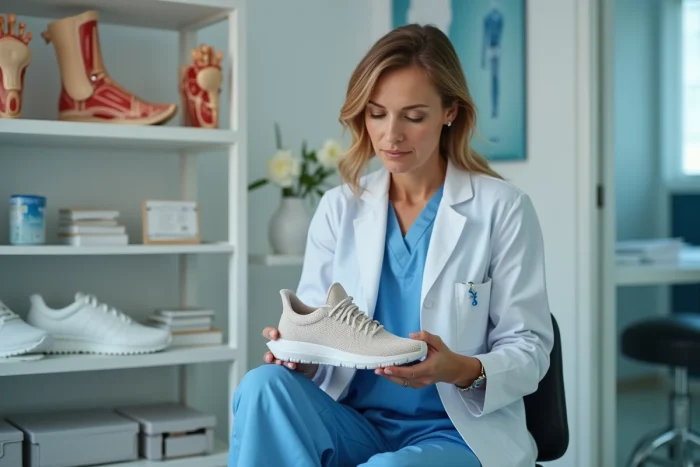
Silent explosion in the cabinets: complaints about plantar pain are skyrocketing, discreetly fueled by a generation of thick-soled sneakers. Skechers shoes, often cited for their instant comfort, have become the subject of a lively debate among health professionals. Between immediate relief and insidious risks, the line seems blurrier than one might think.
Morton’s neuroma: understanding this little-known foot pain
Morton’s neuroma has emerged as a major cause of persistent plantar pain. This condition, far from being anecdotal, manifests as sharp pain between the toes, often while walking or in tight shoes. The compression of an interdigital nerve at the level of the forefoot triggers these sensations of burning, tingling, and numbness. Among the pointed causes: too-narrow shoes, insoles lacking stability, insufficient space for the toes.
Preventing this condition requires adhering to specific criteria. One must focus on an appropriate width for the forefoot, choose a sufficiently stable insole, and ensure good support for the arch. These choices reduce pressure on the nerves and limit the risks of complications, such as neuroma or the appearance of calluses. Specialists remind us that immediate comfort should never overshadow the importance of long-term support.
Field reports, relayed in podiatrists’ opinions on Skechers, are unequivocal. While flexibility and cushioning are appealing, the lack of structure in some Skechers models, or their sometimes too-tight toe box, regularly raises concerns. Professionals recommend avoiding overly flexible, too-narrow models or those lacking anatomical support, especially for those who move a lot or already experience foot pain.
Caring for one’s feet, therefore, means making choices suited to one’s morphology and lifestyle. Sufficient space for each toe, a stable insole, firm support: these are the foundations to lay down to limit the risks of Morton’s neuroma and maintain daily comfort.
Skechers shoes and Morton’s neuroma: what do podiatrists really say?
Podiatrists’ observations converge on one point: while memory foam insoles promise immediate comfort, the situation proves more nuanced in practice. Behind the cushioning and lightness that are so appealing, clinical experience sometimes reveals some flaws. Shoes with insufficient structure, a lack of support, or a narrow toe box put the foot to the test, especially in individuals prone to Morton’s neuroma or already sensitive to plantar pain.
Several points are regularly raised by professionals:
- Memory foam insoles distribute pressure, but they can mask a lack of support, which over time promotes muscle fatigue and instability.
- The value for money is not uniform across models, with some patients mentioning questionable durability.
- A narrow toe box exposes one to nerve compression, increasing the risk of neuroma.
It is essential to keep in mind that immediate comfort should not overshadow the necessity of real support for the foot. For active individuals, seniors, or those living with chronic pain, choosing a structured shoe remains fundamental. Podiatrists emphasize the importance of real arch support and sufficient space in the forefoot, two pillars to limit problems and slow their progression.

Practical tips for choosing shoes and preserving foot health
The choice of shoes goes far beyond style or popularity. For podiatrists, it is a health issue that affects mobility and well-being day by day. The shape of the foot, morphology, age, and daily rhythm are all factors that should influence the purchasing decision.
To guide this choice, here are the main recommendations mentioned by professionals:
- Opt for a width suitable for the forefoot, so that the toes can spread naturally without being compressed. Shoes that are too tight encourage the development of Morton’s neuroma, calluses, or deformities such as hammer toes.
- Systematically avoid overly soft, too-narrow, or unsupportive models, which expose one to various issues over time.
- For those already suffering from plantar pain, investing in a stable insole and effective arch support often makes a difference. Elderly individuals or those with chronic conditions (diabetes, osteoarthritis, vascular disorders) should be particularly vigilant regarding support and cushioning.
- Using custom orthotic insoles proves beneficial for many patients, in addition to a suitable shoe.
Daily walking requires a balance between cushioning and stability. A thick insole may provide instant relief, but risks leading to muscle fatigue and loss of stability in the long run. Conversely, a thin insole promotes natural movement and stability, provided it is well-designed.
The material also matters: leather and cork are appreciated for their ability to allow the foot to breathe and conform to its shape. Consulting a podiatrist ensures finding the right shoe, tailored to one’s experience, age, and needs.
Ultimately, the right choice is not about a few millimeters of foam, but about a concrete attention to what supports, protects, and accompanies each step. Because the foot, discreet yet demanding, does not forgive any compromise in the long run.