
Installing an oven and a refrigerator just a few centimeters apart is like slipping a pebble into a marathon runner’s shoe: it eventually becomes costly over time, and comfort collapses. In some recent homes, the oven and refrigerator are found side by side, despite the recommendations from appliance manufacturers. This proximity leads to excessive energy consumption and shortens the lifespan of the appliances. European standards recommend a minimum of 40 centimeters between these two devices, but this rule is rarely applied in compact kitchens or during quick renovations.
The addition of an American refrigerator further complicates the layout due to its size and power. Adapting the space, respecting distances, and anticipating technical constraints can help avoid long-term inconveniences.
Understanding the stakes of a good arrangement between oven and refrigerator
The arrangement of appliances shapes the daily rhythm in the kitchen. At the core of any reflection is the famous activity triangle, the circuit connecting the refrigerator, sink, and cooktop, which remains a reliable guide to limit unnecessary back-and-forth and make each action more intuitive. But this diagram is not enough: installing an oven right next to the fridge is not just a matter of comfort or aesthetics. It’s a choice that can affect the performance and longevity of your equipment, even domestic safety.
A refrigerator exposed to the heat from the oven sees its compressor running at full capacity, consuming more electricity and wearing out prematurely. In today’s kitchens, where the trend is towards integration and maximizing space, this common-sense rule is too often sacrificed for the sake of a perfect alignment or apparent space savings. Yet, the optimal distance between oven and fridge is not a technical whim: it is the foundation of a sustainable and economical layout.
Respecting these few dozen centimeters is not just about saving on your bills and protecting your appliances: it guarantees air circulation around the equipment, prevents heat buildup, and reduces the risk of breakdowns. A work surface or a separating module placed between the two appliances optimizes organization while protecting furniture and appliances. A well-calibrated layout, taking into account the height of the equipment and accessibility, makes all the difference: fewer obstacles, fewer constraints, and more pleasure in cooking.
What is the ideal distance for daily comfort and safety?
The distance between the oven and refrigerator directly impacts the quality of life in the kitchen. When too close, these two appliances harm each other: the fridge must compensate for the heat emitted by the oven, which increases the energy bill and wears out the components. Leaving sufficient space allows each appliance to breathe and ensures effective ventilation.
Experts agree on a minimum of 40 centimeters of separation. This threshold limits thermal transfers and preserves the efficiency of each appliance. In equipped kitchens, also consider the design of the furniture: integrated vents in the cabinets help dissipate heat and maintain a stable temperature for the refrigerator.
Some points of attention can help secure the layout:
- A space between the top of the refrigerator and the upper cabinets prevents heat from stagnating in the column.
- Inserting a work surface between the oven and the fridge helps organize the space and facilitates movement from one area to another.
Whether integrated or freestanding, each type of refrigerator requires specific consideration. But the logic remains the same: effective ventilation, air circulation, and thoughtful distances. That’s the key to preserving your appliances, reducing wear, and cooking with peace of mind.
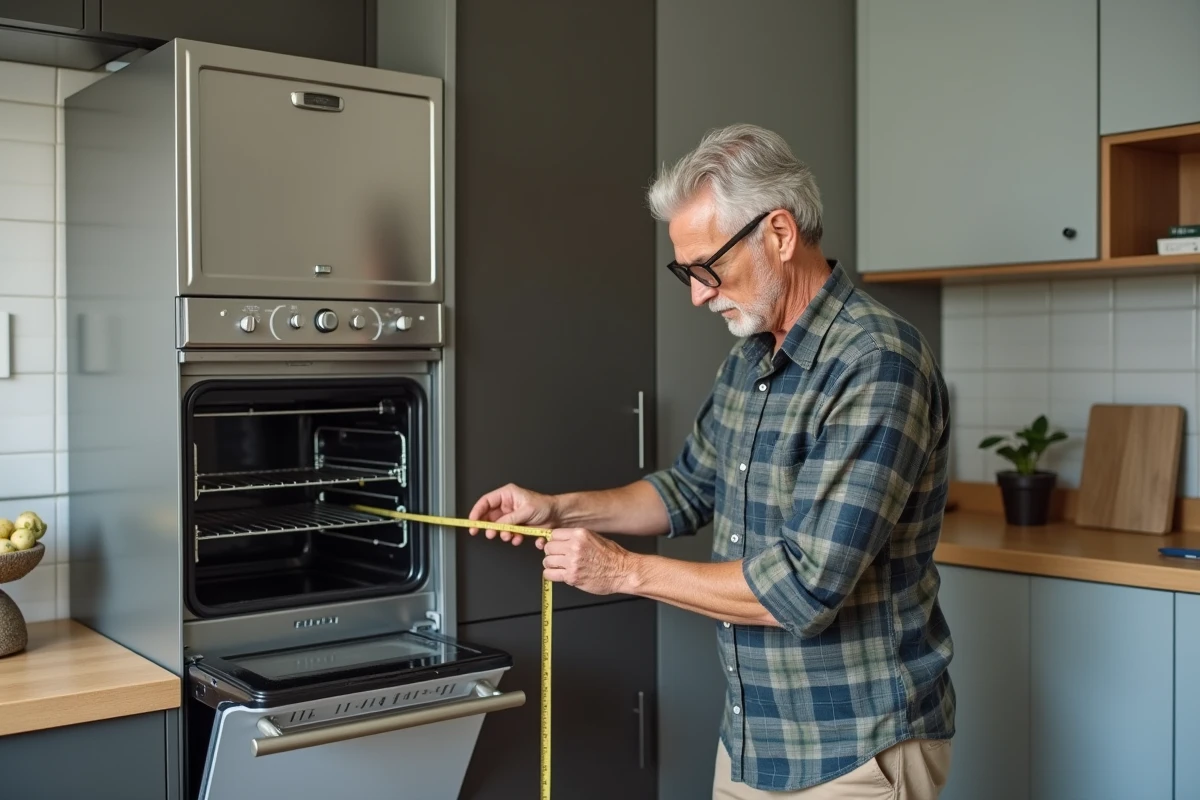
American refrigerator, small space: practical solutions for every configuration
Every kitchen imposes its own compromises. The arrival of an American refrigerator, with its imposing size and double doors, changes the game. It’s difficult to integrate it without revising the overall layout: one must anticipate the door openings, allow sufficient clearance, and rethink the oven’s placement to avoid overheating.
In a limited kitchen, there are practical tips to make the most of the space:
- For built-in appliances, strictly follow the manufacturer’s ventilation recommendations to avoid overheating.
- In a custom project, choose a positioning that allows easy access to both the refrigerator door and the cooking area.
Optimizing the available surface also involves choosing clever furniture: versatile work surfaces, multi-use modules, columns integrating multiple functions. Every detail counts to streamline actions and maintain the performance of the equipment. Whether it’s an XXL refrigerator or a modestly sized kitchen, balance lies in the precise adjustment of distances, attention to ventilation, and seeking solutions tailored to each configuration.
A well-thought-out layout promises a kitchen where energy flows, appliances last, and meals are prepared with pleasure. It’s up to everyone to imagine the circulation that suits them, so that the kitchen remains, day after day, a vibrant and sustainable space.