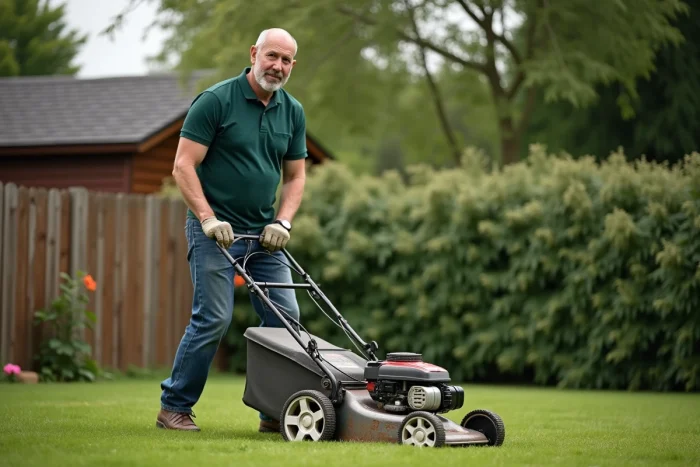
A poorly tilted lawn mower risks oil or fuel infiltration into the sensitive parts of the engine. A simple gesture, often overlooked, can lead to costly breakdowns and avoidable repairs.
The lifespan of equipment depends on proper handling during maintenance. There are specific instructions to avoid any mechanical damage when tilting the device.
Why tilting a lawn mower is never a trivial gesture
Tilting a lawn mower is not a mere formality. Behind every movement, it’s the very balance of the mechanics that is at stake. The engine, the air filter, the spark plug: each requires precise attention. Tilt the device the wrong way and engine oil or gasoline seeps where it shouldn’t. The result: the heart of the machine gets clogged, starting becomes erratic, sometimes impossible, and repairs pile up.
The principle is clear: always tilt the machine away from the air filter and the spark plug. Raise the carburetor to prevent any contact with unwanted liquids. This reflex minimizes the risk of clogging, protects combustion, and ensures the engine block remains sealed. For the gas tank, it’s best to empty it before long-term storage. The oil should be changed regularly to keep the engine in good shape over time.
This precise gesture, far from being trivial, makes all the difference in the lifespan of the lawn mower. To discover the details of the method, the site how to tilt a mower for cleaning shares step-by-step instructions. Mastering this maneuver is not a luxury: it’s the basics of maintenance, a way to respect the mechanics and ensure that the machine will still be ready for several seasons.
Which side to choose to tilt your mower without risking engine damage?
With a lawn mower, the direction in which you tilt the device should never be left to chance. A poorly calculated movement can expose the engine to failures: oil leaks, gasoline infiltration, or a saturated air filter. To avoid these scenarios, remember the rule: always tilt the machine away from the air filter and spark plug. This simple choice protects the weak point of the system and prevents starting or combustion issues.
Tilting the lawn mower the wrong way exposes it to internal leaks that disrupt lubrication and make starting difficult. Engine oil on the filter or spark plug causes misfires and can even stop the machine abruptly during the next use. For any cleaning or blade replacement, this tilting direction must always be respected.
Here are the key steps to follow to leave nothing to chance:
- Place the handle on the ground, keeping the air filter and spark plug facing up.
- Disconnect the spark plug before any handling to work safely.
- Limit the duration for which the machine remains tilted to reduce oil transfer.
Respecting the order of these gestures is not perfectionism: it’s what allows lawn mowers to last. The engine then retains efficiency and flexibility, combustion remains clean, and starts happen smoothly. A detail that separates those who truly know their equipment from those who rely on luck.
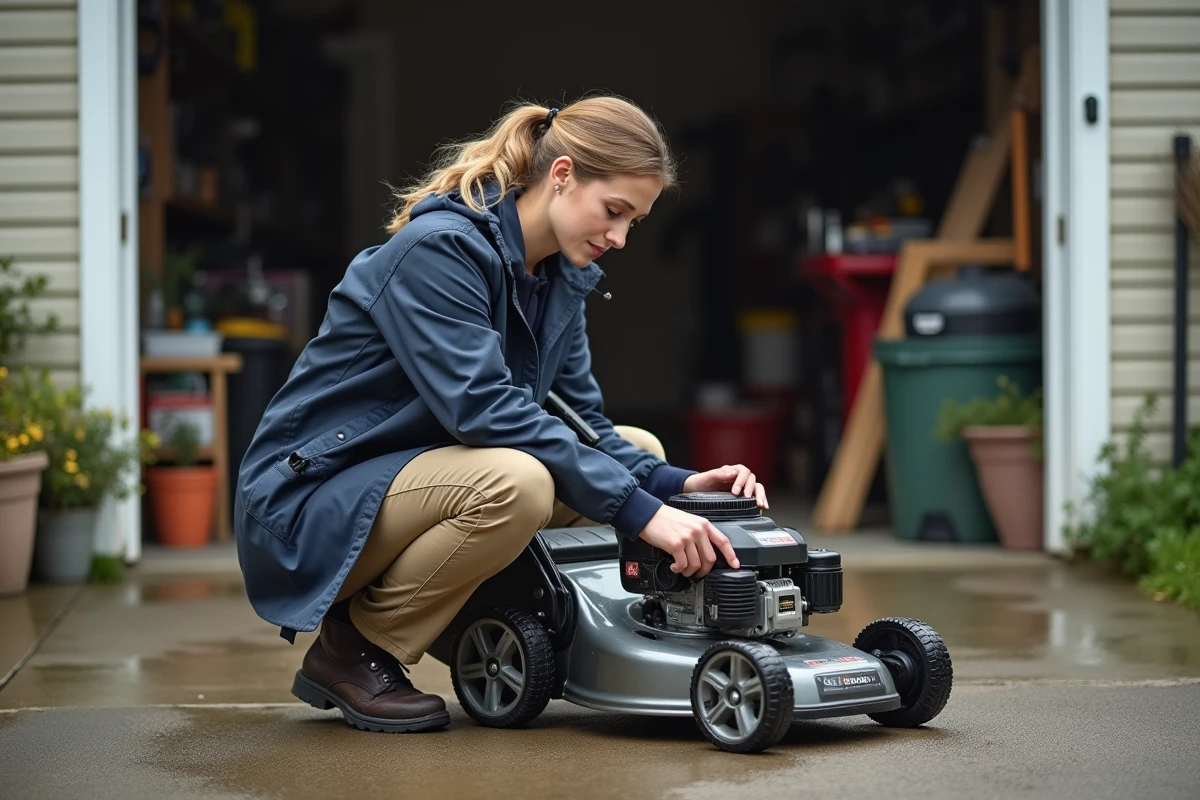
Practical tips for handling and maintaining your mower safely
Before any operation on a lawn mower, safety must come first: remember to disconnect the spark plug. This simple gesture eliminates any risk of unexpected starting. Set up on a flat and stable surface to work without surprises. When working on the blade or housing, protective gloves are recommended.
A thorough cleaning after each mowing helps prevent the accumulation of dirt. To do this, remove grass debris and dirt with a suitable brush or a wooden spatula. A clean cloth ensures finishing touches and helps prevent corrosion. Regular cleaning of the housing and blade contributes to a consistent cut and protects the mechanics.
Here are the points to monitor for effective long-term maintenance:
- Follow the recommended intervals for engine oil changes, often between 20 and 50 hours of use.
- Inspect the air filter and clean or replace it as soon as it is dirty.
- Check the spark plug to ensure reliable starting and flawless combustion.
- Sharpen or change the blade as soon as it shows signs of fatigue or wear.
Also remember to empty the grass catcher after each mowing and let it dry to avoid mold. Battery-powered or robotic mowers should be stored away from moisture and frost. For sophisticated or self-propelled models, an annual visit to a professional allows for a thorough check and replacement of worn parts. Every maintenance gesture accumulates, and that’s how your mower will last for years, ready to start up at a moment’s notice when the lawn demands it.